Everything on this site sits on top of work by people trying to understand how a whole brain does a thing. Here is what each of them is actually trying to do, what we borrow, and what we do not claim.
International Brain Laboratory
Map a decision across a whole brain.
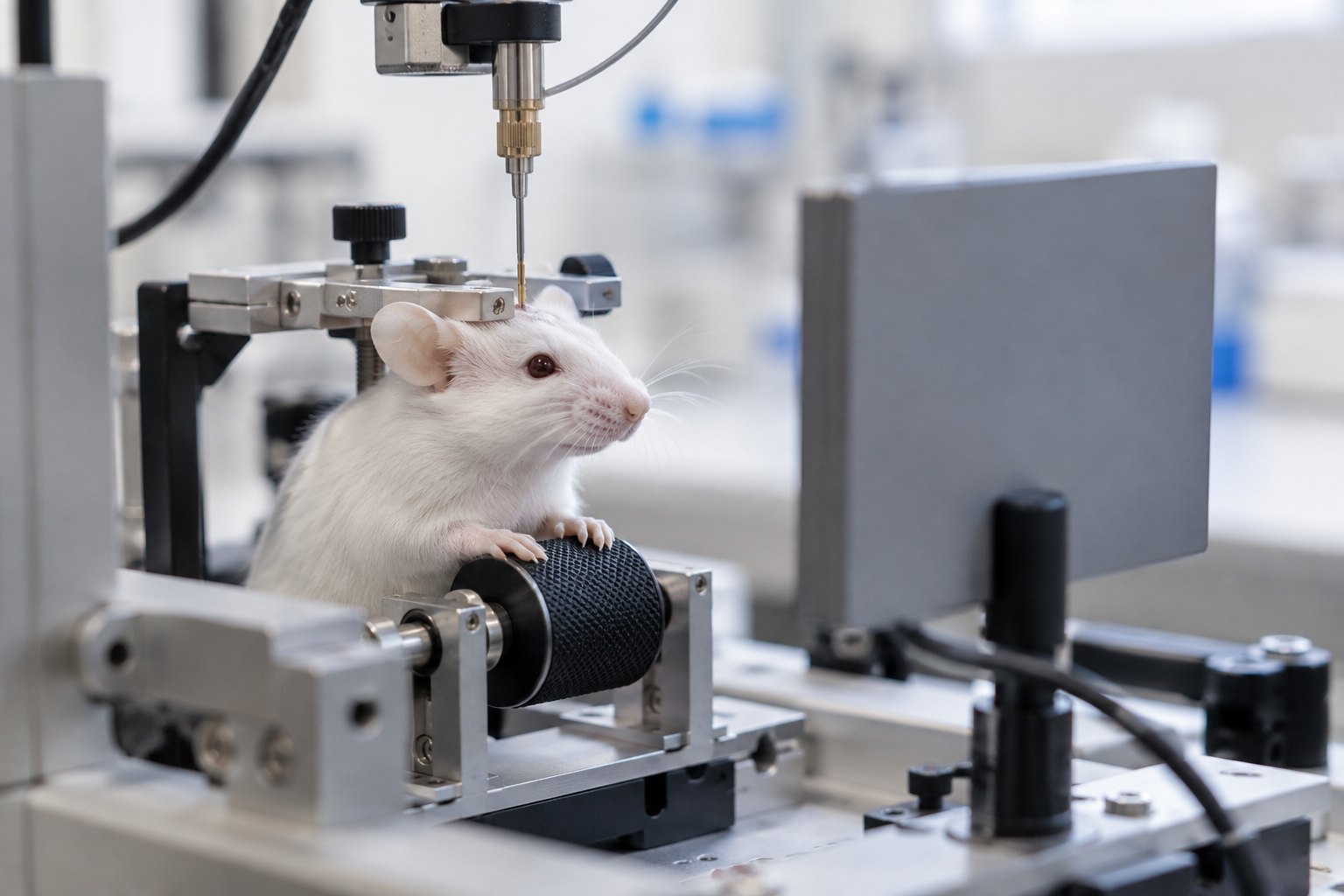
Their aim. Twelve labs recorded the same task the same way so that, for the first time in a mammal, a single decision could be followed neuron by neuron across every region. Their finding: the stimulus, the choice, the feedback and the wheel are represented far more widely than the classical areas; feedback shows up nearly everywhere.
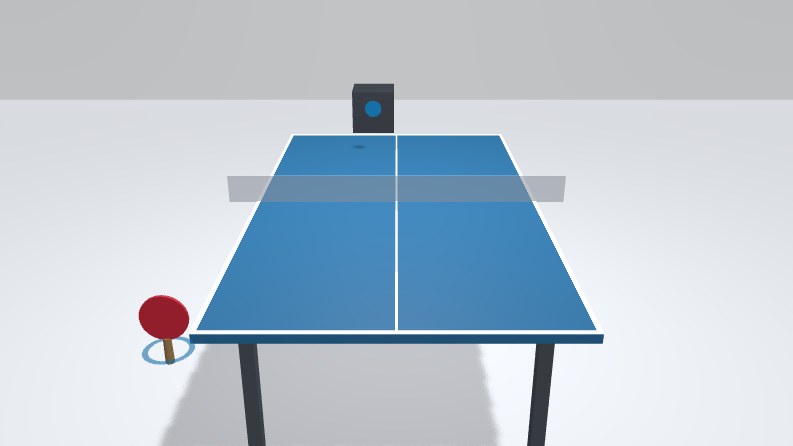
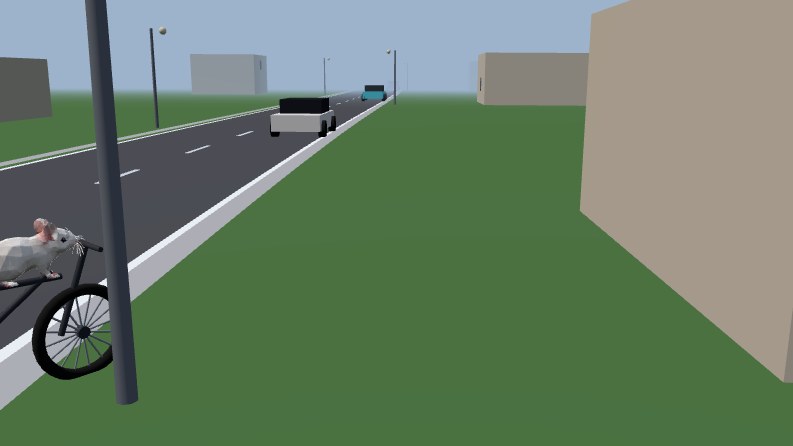
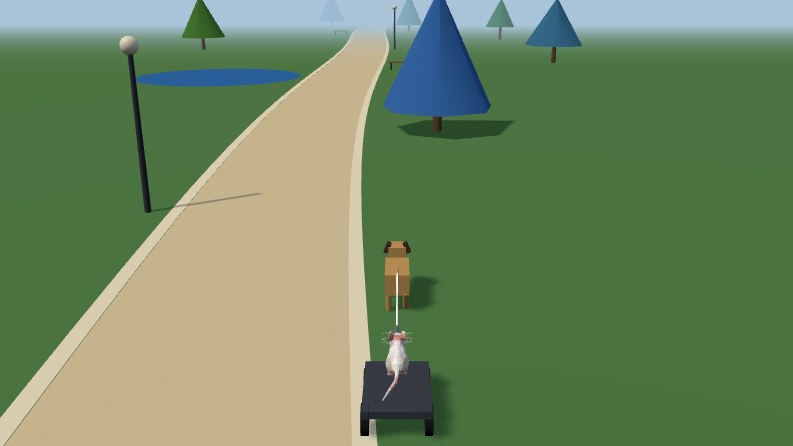
What we do. Show all 621,733 of their neurons, then fit one session and let its four task variables drive a paddle, a bike and a leash.
Not claimed. That our model explains the decision. It predicts the next 62 ms of activity; that is all it is scored on.
Allen Institute
Draw the wiring diagram.
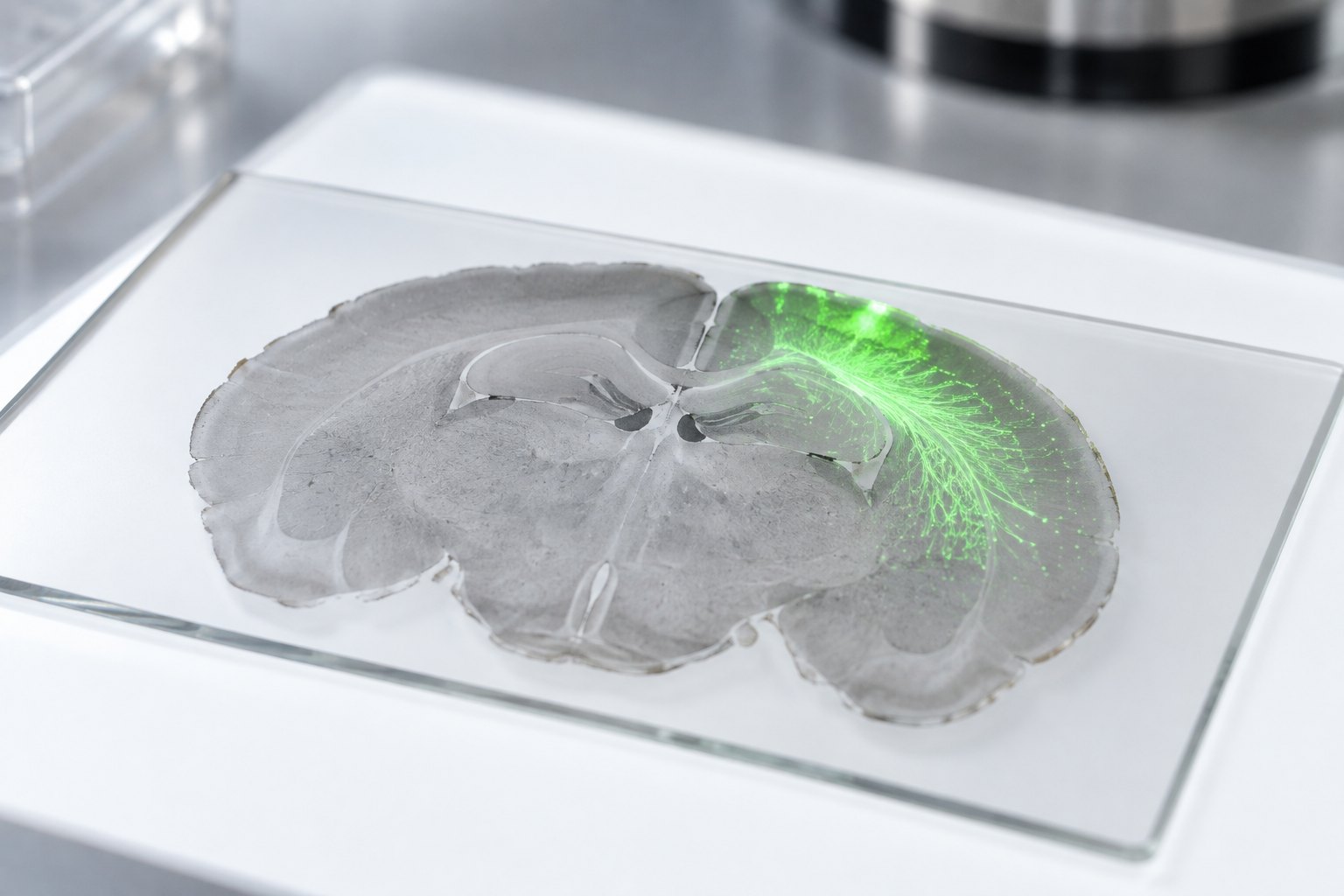
Their aim. A mesoscale connectome of the mouse: thousands of tracer injections, each imaged through the whole brain and registered to one common atlas, so that every region's outputs can be looked up. And, separately, a cell-by-cell atlas of where each cell type sits.
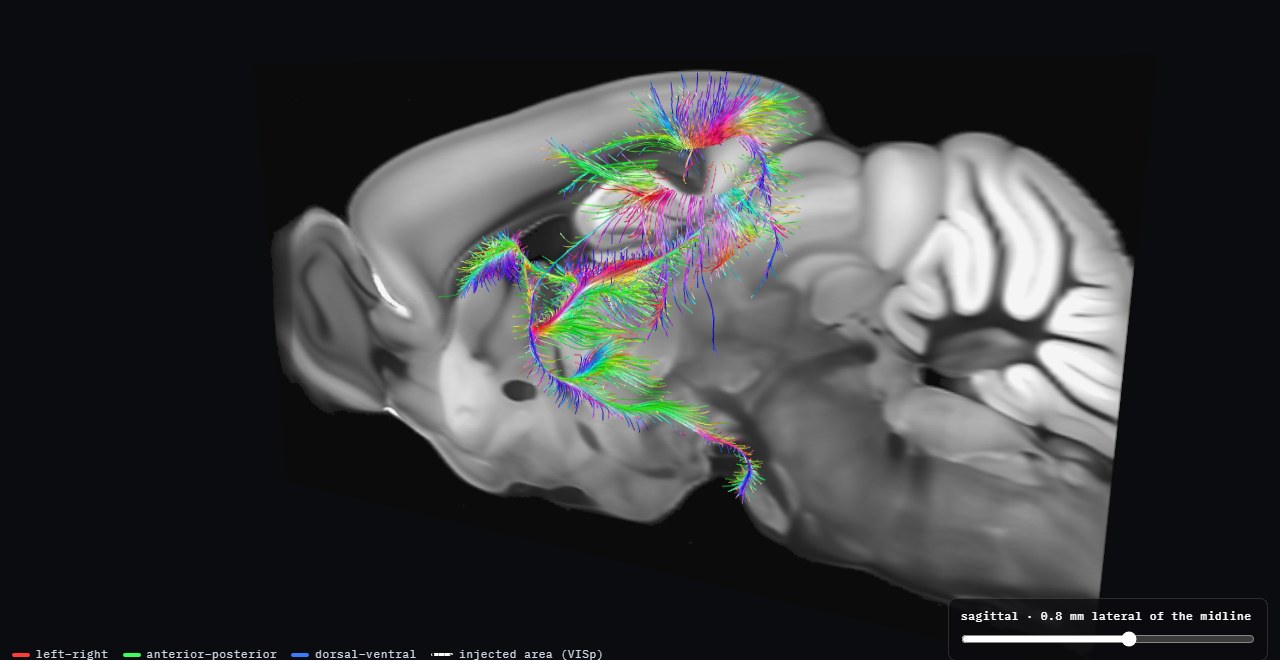
What we do. Use their atlas as the silhouette behind the recordings, and track fibre paths on one of their visual-cortex injections for the scan.
Not claimed. That our paths are axons. They follow the density of the tracer; the tracing itself is theirs.
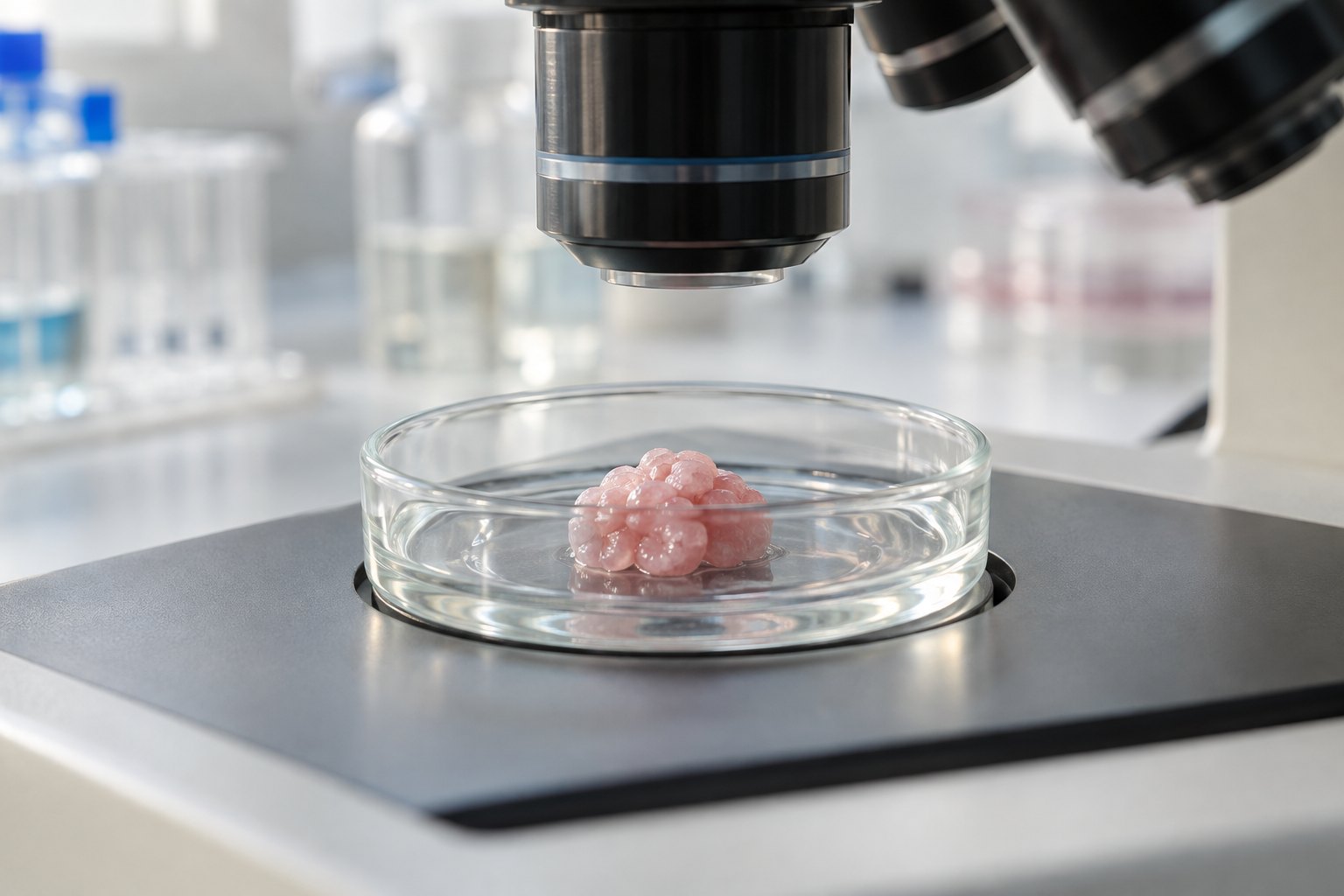
Stanford · Pașca lab
Put human cells in a living circuit.
Their aim. Psychiatry has one of the lowest success rates in clinical trials because mice do not get the human disorders. Human organoids grown into a mouse cortex are meant to be a model for those disorders: epilepsy, autism, cerebral palsy. The mice behaved as ordinary mice. No enhancement was found or sought.
What we do. Use the story as the reason to look closely at an all-mouse brain this week.
Not claimed. Anything about their data. We do not have it and do not model it.
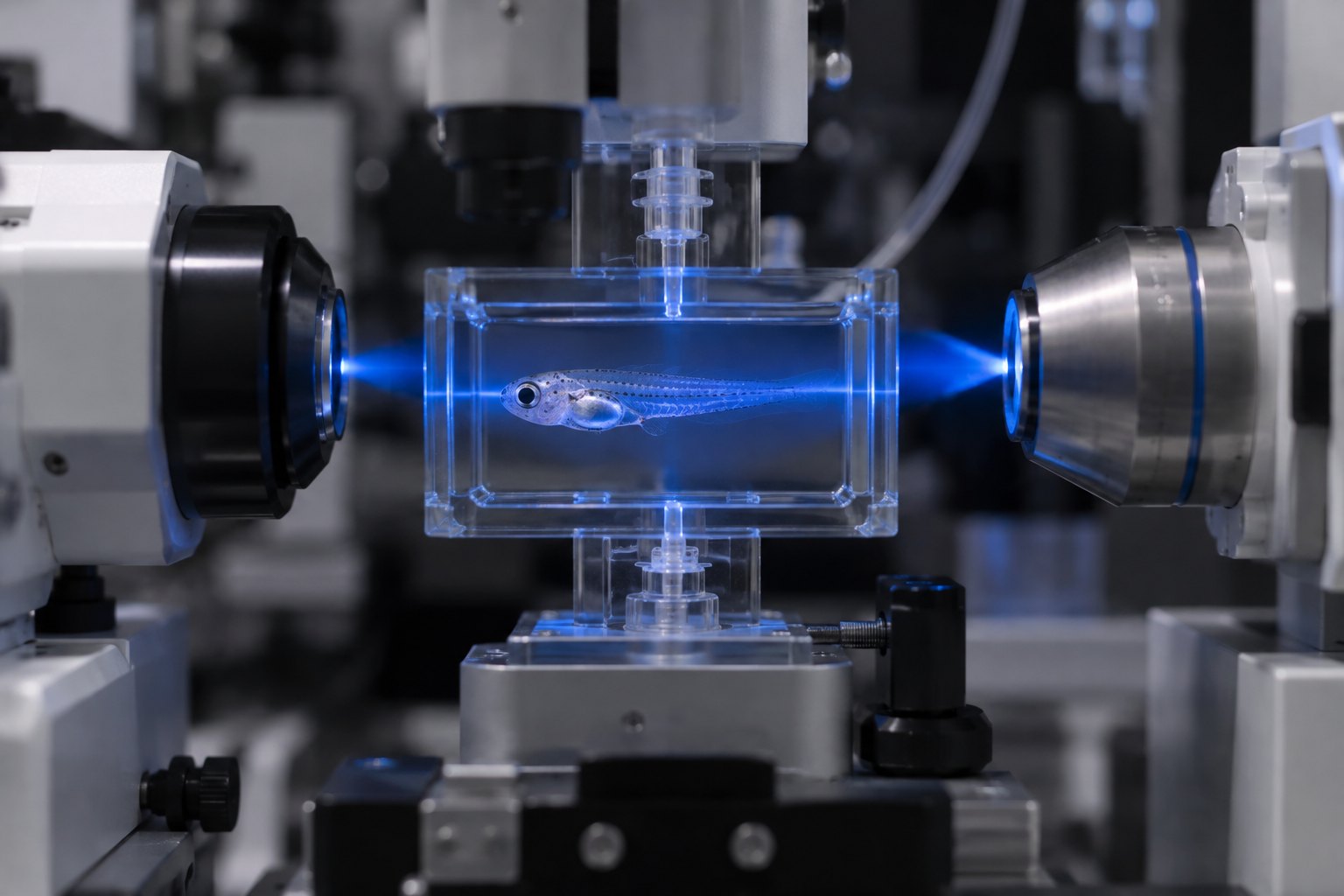
Google Research · Janelia
Predict a whole brain.
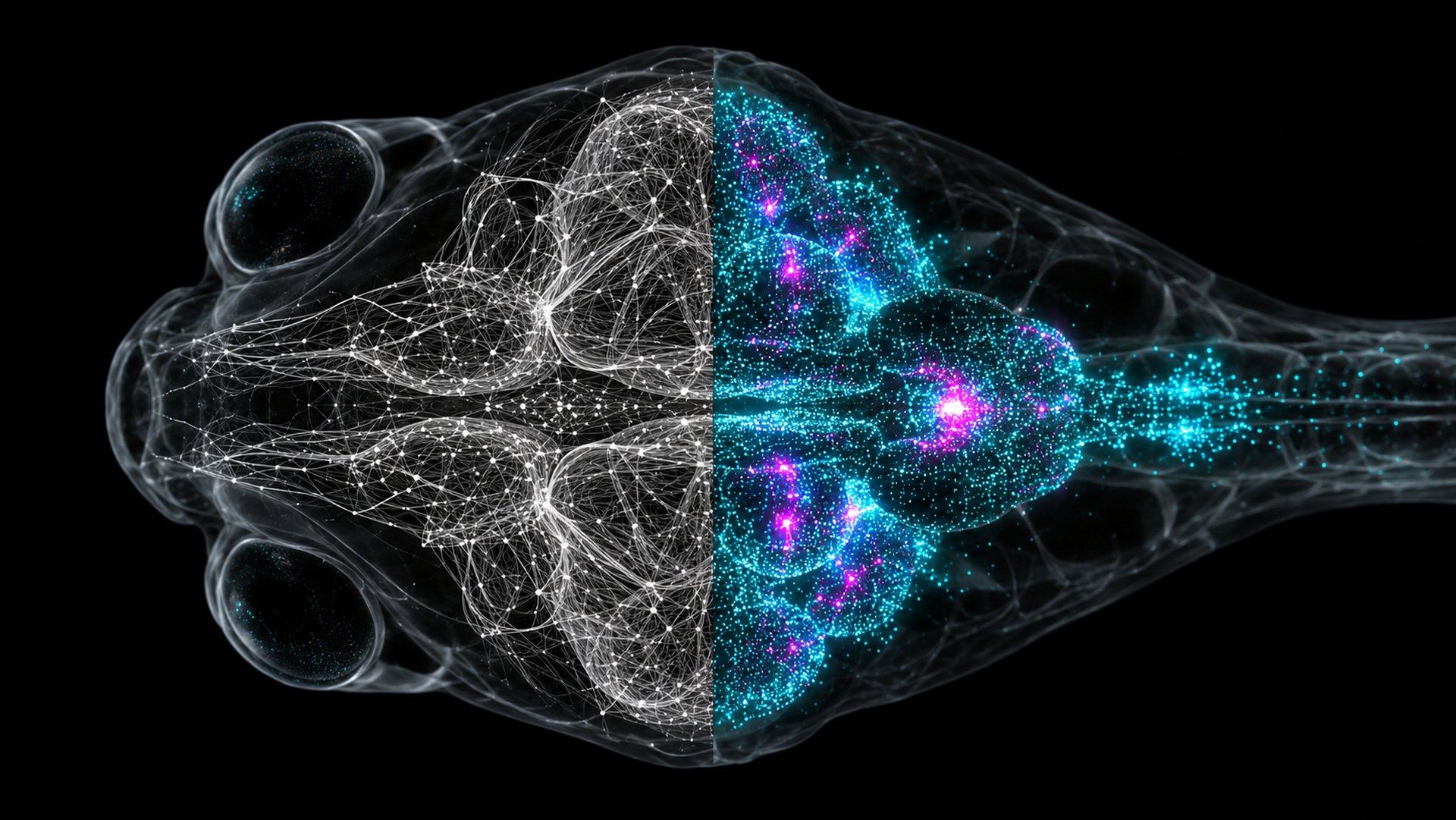
Their aim. A benchmark for forecasting cellular-resolution activity across an entire vertebrate brain (a larval zebrafish, 70,000 neurons), with the same brain being mapped at synapse level so that structure can later be added to the forecasts.
What we do. Our zebrafish site runs on that data; the mouse model here is the same kind of forecaster, scored the same way, on spikes instead of calcium.
Not claimed. Any result on their benchmark. Our fits are one-step, in the browser, for a task.
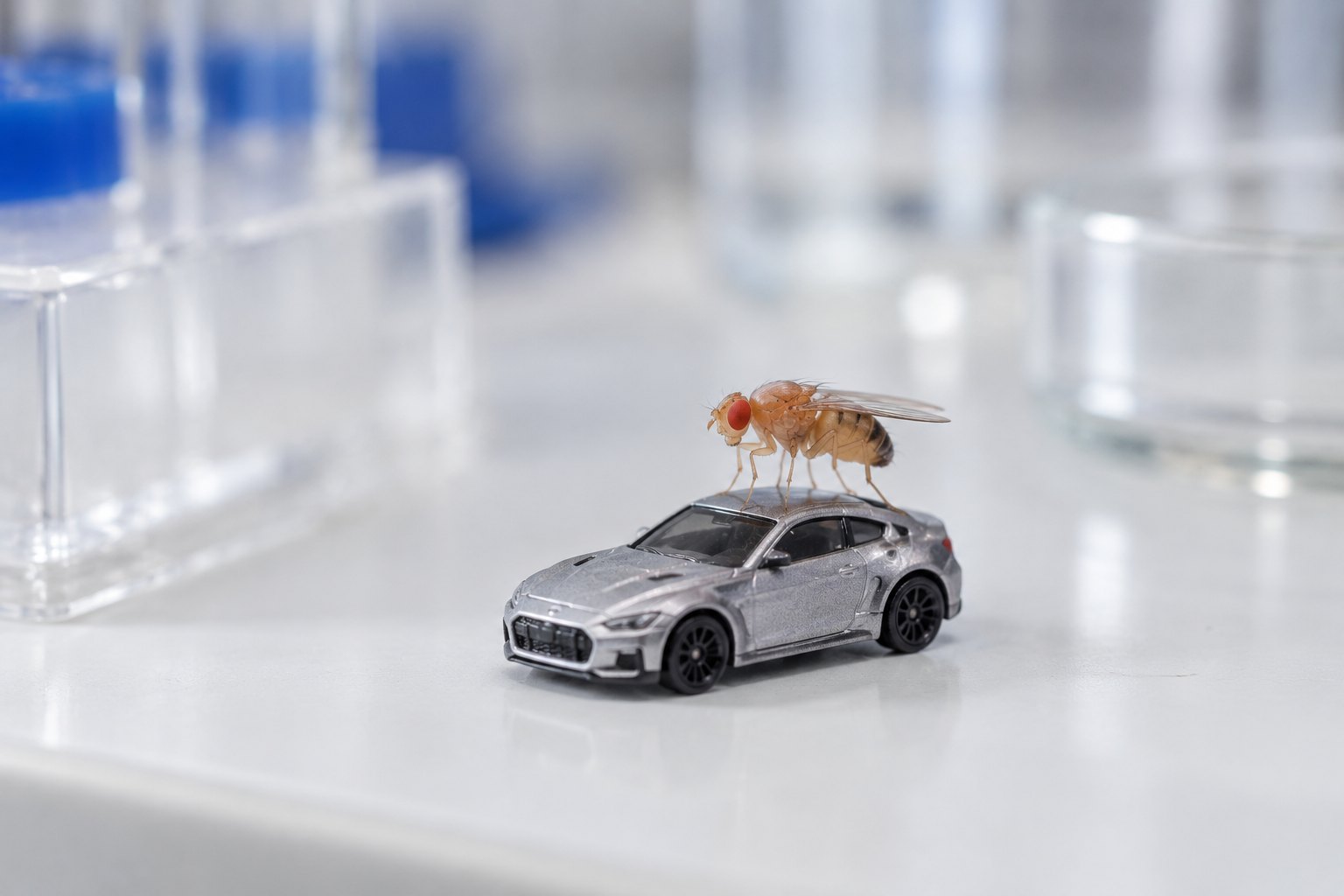
The Driving Fly · STONKFLY
Give a mapped brain something to do.
Their aim. Take a brain that has been mapped or recorded, run it in a loop with a task (a car, a market), and be honest about the adapters between the two. The fly's connectome drives a car; STONKFLY wired a full retained fly simulation to guarded trading actions.
What we do. The same loop for a mouse, with disclosed adapters and no scripted outcomes.
Not claimed. That the mouse learns the task. The learning rule is on; the score says what happened.
This site
The third kind of model.
A neuroscientist quoted in the story listed what her field has to work with: "mice, cells that live on a plate, and neural networks on a computer". This site is the third kind, fitted to the first. It adds nothing to the biology; it lets you watch a real recording drive something, with every step on the page.
Not claimed. Cognition, a disease model, or a brain that thinks. A mouse with its own cortex, and a computer keeping up with it.